Arabica vs. Robusta: Lightwave’s Take
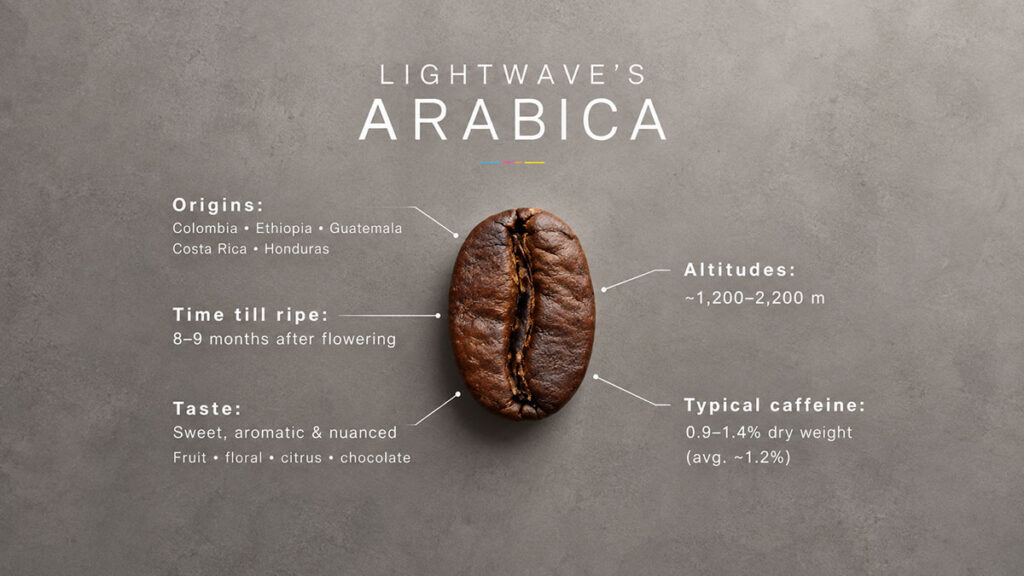
Arabica and Robusta are two different species of coffee, and the difference goes well beyond the name on the bag. Arabica is generally known for greater sweetness, aroma, and flavor complexity. Robusta tends to have more caffeine, a heavier body, and stronger bitter or earthy flavors. But just like roast level, species alone doesn’t tell you whether a coffee is good.
At Lightwave, we exclusively use Arabica coffee because it gives us the kind of flavor, sweetness, and origin character we’re looking for. We source specialty-grade Arabica and then select coffees that meet our own standards for taste, quality, and consistency.
Beyond the bean type, where the coffee was grown, the variety, elevation, processing, freshness, green coffee quality, and how it is roasted all still matter. A poorly grown or poorly roasted Arabica isn’t going to become great coffee just because “100% Arabica” is printed on the bag.
Robusta is more common in mainstream/commercial coffee because it is generally higher yielding, more resilient, and often less expensive at scale. That makes it useful for large-volume coffee production, but it’s a very different approach from the way we select coffee at Lightwave.
Arabica and Robusta Are Actually Different Coffee Species
Arabica is Coffea arabica.
What we usually call Robusta comes primarily from Coffea canephora. Robusta is simply the name most coffee drinkers are familiar with.
Together, Arabica and Robusta make up the vast majority of commercially grown coffee around the world.
But they’re different plants with different growing characteristics and, most importantly for the person drinking the coffee, different tendencies in the cup.
Arabica has traditionally been at the center of specialty coffee because of its potential for sweetness, aroma, complexity, and distinctive origin character.
Robusta earned its name for a reason. The plants tend to be more productive and more resistant to certain pests, diseases, and environmental stresses than Arabica.
That makes Robusta extremely important to the global coffee industry.
It also doesn’t mean the two taste the same.
What Does Arabica Coffee Taste Like?
There’s no single “Arabica flavor.”
That’s actually one of the things we like about it.
Depending on where the coffee is grown, the variety, how it is processed, and how it is roasted, Arabica can give you flavors that remind you of:
- Chocolate
- Caramel
- Honey
- Citrus
- Apple
- Berries
- Stone fruit
- Flowers
- Tea
- Nuts
- Spices
- Wine
You can see that range just by looking through our own coffees.
Our Colombia Huila has clementine, honey, and chocolate.
Guatemala Baja Verapaz Cubulco moves toward dark chocolate, almond, and red currant.
Our Costa Rica Cordillera de Fuego uses anaerobic processing and has a distinctive cinnamon character.
And Ethiopia Guji Danbi Udo shows another side of Arabica entirely, coming from high elevations in Ethiopia and using natural processing to emphasize sweetness and fruit.
They’re all Arabica coffees.
They don’t taste alike.
That’s the point.
What Does Robusta Coffee Taste Like?
Commercial Robusta tends to be stronger and more bitter, with less of the sweetness and flavor complexity typically associated with high-quality Arabica.
Common descriptions can include:
- Earthy
- Woody
- Grain-like
- Nutty
- Dark chocolate
- Bitter
- Heavy-bodied
Robusta also generally contains substantially more caffeine than Arabica, which can contribute to its more pronounced bitterness.
But there’s an important distinction here.
Robusta isn’t inherently incapable of tasting good.
For a long time, much of the commercial Robusta market focused on yield, resilience, and efficiency rather than exceptional cup quality.
The Specialty Coffee Association has highlighted examples of high-quality Canephora that show sweetness, fruit, complexity, and acidity that don’t fit the traditional stereotype of Robusta.
So we wouldn’t reduce this to “Arabica is good and Robusta is bad.”
Coffee is more complicated than that.
Arabica vs. Robusta at a Glance
| Arabica | Robusta | |
|---|---|---|
| Species | Coffea arabica | Coffea canephora |
| Typical flavor | Sweeter, more aromatic, and often more complex | Stronger, heavier, and often more bitter or earthy |
| Caffeine | Lower | Higher |
| Acidity | Varies considerably by bean, origin, processing, and roast. Can be bright or quite balanced and low in perceived acidity. | Often perceived as lower in acidity, although this also varies by coffee and roast. |
| Growing conditions | Often more demanding and commonly grown at higher elevations | Generally more resilient and productive |
| Specialty coffee | Dominates the specialty coffee market | Less common, but specialty Canephora exists |
| Lightwave | Exclusively used in our coffees | Not used |
These are general differences, not absolute rules. There’s a lot of variation within both species.
Does Robusta Really Have More Caffeine?
Yes.
This is one of the clearer differences between Arabica and Robusta.
Robusta generally contains substantially more caffeine than Arabica, often close to twice as much depending on the particular coffees being compared.
That extra caffeine isn’t just relevant to the person drinking it. Caffeine is part of the coffee plant’s natural chemistry and can help the plant defend itself against insects and other pressures.
But more caffeine doesn’t automatically mean better coffee.
It means more caffeine.
If flavor is what you’re after, choosing coffee simply by which species contains more caffeine misses most of what makes coffee interesting.
Why Does Arabica Usually Cost More?
Arabica can be more demanding to grow.
The plants are generally less resilient than Robusta and can produce lower yields. Many of the coffees we source at Lightwave are also grown at higher elevations, where conditions can create the potential for exceptional cup quality but farming, harvesting, and processing can require more care and expertise.
For our purposes, that’s worth it.
We’re looking for coffees with distinctive sweetness, aroma, balance, body, fruit, chocolate, florals, or other characteristics that give each origin its own personality.
Higher elevation alone doesn’t guarantee great coffee, but when the right variety, growing conditions, harvesting, processing, and roasting come together, it can produce remarkably distinctive flavor profiles.
And we’re not buying a coffee simply because it’s Arabica.
We evaluate the individual coffee.
Where was it grown?
How was it processed?
What does it taste like?
Is it clean?
Is it sweet?
Does it have something distinctive about it?
Does it meet the quality we’re looking for?
We taste through a large number of green coffee samples and don’t buy something simply because we need another coffee to sell. If it doesn’t meet our expectations for taste and quality, we pass on it.
So when you’re buying specialty Arabica, you’re not paying more just for the word “Arabica.” You’re paying for all of the decisions and work that went into the coffee before it ever reached the roaster.
Why Lightwave Exclusively Uses Arabica Coffee
Our approach to roasting starts with the coffee itself.
We’re trying to bring out what is already interesting in the bean rather than create one dominant roasted-coffee flavor across everything we sell.
Arabica gives us a huge spectrum to work with.
Take Colombia Huila. Its clementine, honey, and chocolate give you a coffee that’s bright without being difficult to approach.
Then compare that with Costa Rica Cordillera de Fuego, where the combination of origin and anaerobic processing produces a much more unusual cinnamon-driven profile.
Or Ethiopia Guji Danbi Udo, where high elevation, Ethiopian varieties, and natural processing create a very different cup.
These coffees aren’t interesting simply because the bag says Arabica.
They’re interesting because they’re high-quality Arabica coffees with something worth bringing forward through roasting.
Arabica Doesn’t Mean Light Roast
This is another easy misconception.
Arabica describes the coffee species.
Light, medium, and dark describe how the coffee is roasted.
They’re two different things.
Our Dusk Dark Roast Blend is still made entirely from Arabica coffees.
We simply develop the roast further to bring out more body, toffee, darker chocolate, and deeper roasted flavors while still preserving the quality of the beans underneath.
You don’t need Robusta to make coffee bold.
And you don’t need to roast good Arabica until all of its original character disappears.
Dusk is our version of a darker coffee for someone who wants more body and deeper flavor without the burnt or harsh edge people sometimes associate with dark roast.
What About Coffee Blends?
A blend can be Arabica, Robusta, or a combination of both.
The word “blend” only tells you that multiple coffees have been combined. It doesn’t tell you which species were used or whether the coffee is high or low quality.
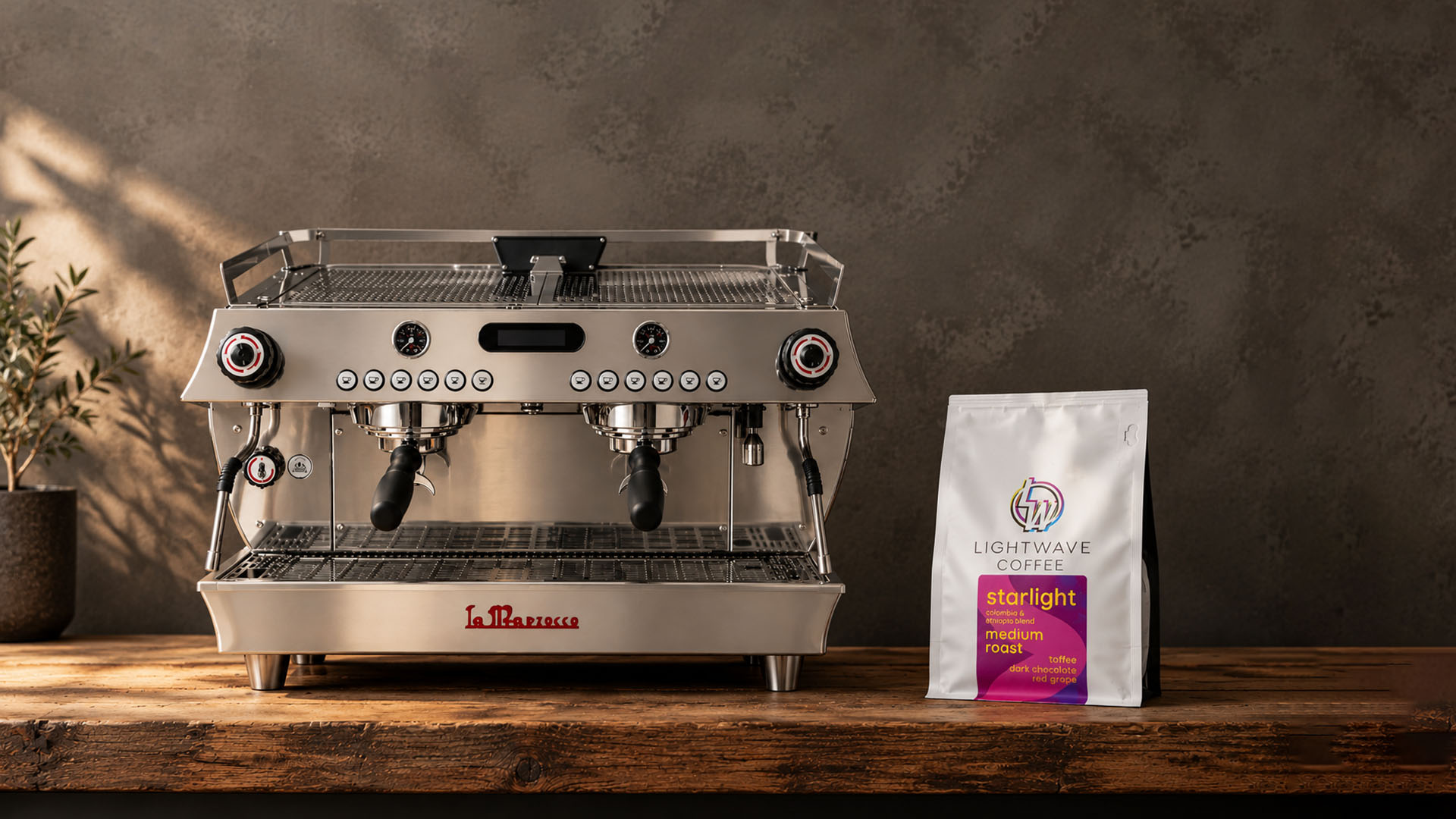
Our Starlight Blend is a good example.
It’s made with two Arabica coffees:
- Washed Colombia Huila
- Natural Ethiopia Guji Shakiso
The Colombian coffee brings chocolatey body while the Ethiopian component adds brighter apple fruit.
Together they create a balanced coffee that works as drip, espresso, or cold brew.
For us, blending isn’t about hiding cheaper coffee inside a bag. It’s about combining coffees whose flavors work well together.
Is 100% Arabica Automatically Better Coffee?
No.
“100% Arabica” tells you the species.
That’s useful information, but it doesn’t tell you everything you probably want to know.
It doesn’t tell you:
- Where the coffee was grown
- How ripe it was when harvested
- How carefully it was sorted
- How it was processed
- How the green coffee was stored
- How it was roasted
- How fresh it is
- Whether anyone actually thought it tasted good before putting it in the bag
There is excellent Arabica.
There is mediocre Arabica.
There is poor Arabica.
The same basic principle applies to Robusta.
The species gives you part of the story. Quality comes from a much longer chain of decisions.
Is Specialty Robusta a Real Thing?
Yes.
You’ll increasingly see the term specialty Canephora or high-quality Robusta used for coffees produced with more attention to variety, harvesting, processing, and cup quality.
The specialty industry is still learning more about what quality can look like for Canephora instead of judging it entirely by expectations built around Arabica.
There are already examples of Canephora coffees with fruit, sweetness, aroma, and complexity that don’t fit the old Robusta stereotype.
That’s worth paying attention to.
For Lightwave today, though, Arabica is where we find the flavor and quality profiles we want to roast and serve.
Does Robusta Make Better Espresso?
Not automatically.
Robusta has historically been used in some espresso blends because it can contribute more caffeine, heavier body, and a stronger flavor.
But you don’t need Robusta to make great espresso.
Starlight is all Arabica and works extremely well as espresso because it already has the chocolatey body, sweetness, and brighter fruit needed for a balanced shot.
If you want something darker, Dusk gives you more roast character and body while still remaining 100% Arabica.
The species is one variable.
The coffee, roast, grind, dose, extraction, and your own taste matter too.
So Which Is Better: Arabica or Robusta?
We wouldn’t reduce it to one species being universally better.
If you’re looking for the sweetness, fruit, florals, chocolate, aroma, and origin character associated with modern specialty coffee, Arabica is where you’ll find most of that market today.
That’s also why it’s what we exclusively use at Lightwave.
But high-quality Canephora challenges the idea that Robusta can only be cheap, bitter commodity coffee. There are producers putting much more attention into it, and there’s more to learn.
For someone standing in front of a shelf deciding what to drink, we’d focus less on finding the words “100% Arabica” and more on finding a roaster you trust.
Then look at the origin, roast, processing method, and flavors.
That’s where coffee starts getting interesting.
Frequently Asked Questions About Arabica and Robusta Coffee
What’s the Main Difference Between Arabica and Robusta Coffee?
Arabica and Robusta are different coffee species. Arabica generally offers more sweetness, aroma, and flavor complexity, while Robusta typically contains more caffeine and tends toward a heavier body and stronger bitter or earthy characteristics.
Does Robusta Have More Caffeine Than Arabica?
Yes. Robusta generally contains substantially more caffeine than Arabica, often close to twice as much depending on the coffees being compared.
Is Arabica Less Bitter Than Robusta?
Generally, yes. Arabica tends to contain less caffeine and often shows more sweetness and flavor complexity, while commercial Robusta is commonly associated with stronger bitterness and heavier flavors.
Roasting and brewing still make a major difference.
Is Arabica More Acidic Than Robusta?
Not necessarily in the way people usually mean it.
Arabica can have brighter perceived acidity, but acidity varies substantially based on the particular coffee, its origin, processing method, roast level, and brewing. Many Lightwave coffees are roasted for balance rather than sharp acidity.
Is All Specialty Coffee Arabica?
No. Arabica dominates the specialty coffee market, but high-quality specialty Canephora also exists.
Is 100% Arabica Good Coffee?
It can be, but the label alone isn’t a guarantee of quality. Origin, variety, growing conditions, processing, harvesting, storage, roasting, freshness, and brewing all affect the final cup.
Does Lightwave Use Robusta?
No. Lightwave exclusively uses Arabica coffees selected for their quality, flavor, and individual character.
Can Arabica Be Dark Roasted?
Absolutely. Arabica and Robusta describe coffee species, not roast levels. Our Dusk Dark Roast Blend is a darker roast made entirely with Arabica coffees.
Which Lightwave Coffee Is a Good Introduction to Arabica?
Starlight is an easy place to start. It combines Colombian and Ethiopian Arabica coffees for a balance of chocolatey body, sweetness, and brighter fruit.
From there, Colombia Huila is a good step toward a more origin-driven coffee, while Ethiopia Guji Danbi Udo and Costa Rica Cordillera de Fuego show just how different Arabica coffees can taste.